Key Takeaways
- A drone hobbyist in Singapore does not always need a licence, but must still follow strict operational rules.
- Drone registration in Singapore and related CAAS requirements depend on factors such as drone weight, operational purpose, flight location, and activity type.
- Authorities like the Civil Aviation Authority of Singapore and Singapore Police Force actively enforce drone laws.
- Activities such as filming for clients or flying in restricted zones can quickly shift hobby use into regulated territory.
- Training, while not always mandatory, helps hobbyists fly safely and avoid costly mistakes.
Recreational Flying Does Not Mean Unregulated
Many first-time users approach flying with a simple assumption: if it is just a hobby, the rules should be minimal.
In Singapore, that assumption does not hold.
Even as a drone hobbyist, you are operating within one of the most tightly managed airspaces in the world. The country’s aviation framework is designed to account for dense urban environments, proximity to airports, and sensitive infrastructure.
This is why drone rules in Singapore apply even for recreational purposes and regardless of whether you are earning money. What matters is not your intent, but the potential risk your drone poses.
Why Singapore Regulates Even Hobbyist Drone Use
Singapore’s airspace is compact and highly controlled. A drone flying in the wrong place, even briefly, can disrupt aircraft operations or pose risks to people on the ground.
Regulations enforced by the Civil Aviation Authority of Singapore focus on:
- Where you fly – airspace restrictions, no-fly zones
- How you fly – safe operation practices
- What you fly – drone weight and capabilities
This is why Singapore drone laws can feel stricter for beginners compared to other countries.
Drone Registration vs Licensing: What is The Difference?
Registration vs Licensing: What Each Requirement Means
Many first-time drone users assume that registration and licensing are interchangeable, but they are distinct requirements under Singapore’s aviation regulations set by the Civil Aviation Authority of Singapore (CAAS).
Registration applies to the unmanned aircraft. It is required when certain thresholds, such as weight or use case, are met, and ensures that the drone can be traced back to its owner.
Licensing applies to the operator. It reflects the individual’s competence in operating a drone safely, particularly in higher-risk scenarios, commercial activities, or controlled environments.
In practice, these requirements often work together. Being registered does not automatically mean you are authorised to operate a drone in all situations, and having a licence does not remove the need for registration where applicable.
Understanding how these requirements fit within CAAS regulations allows beginners to approach drone operations more systematically and to prepare for progression to more advanced use cases, such as UAPL-certified operations.
So, Do Drone Hobbyists Need a Licence?
The short answer: not always, but sometimes.
A drone hobbyist typically does not need a licence if the drone is used for recreational purposes, falls within lower-risk categories, and is operated within permitted areas and operational limits.
However, a licence such as the Unmanned Aircraft Pilot Licence (UAPL) may be required when:
- You conduct higher-risk operations
- You fly in controlled or restricted airspace
- Your drone usage becomes commercial or complex
- Drone operations involving unmanned aircraft weighing above 7kg
Do note that flying in controlled or restricted airspace requires separate CAAS operational permits and approvals regardless of whether the operator holds a UAPL.
This is where structured pathways programmes become relevant. These programmes include:
- UAPL Course: A structured certification programme that prepares you for higher-risk drone operations, covering airspace regulations, safety protocols, and assessment requirements set by the Civil Aviation Authority of Singapore.
- UAPL Training Drone Programme: A hands-on training pathway focused on practical flight skills, including manoeuvring, emergency handling, and real-world operational scenarios to build confidence and control.
Situations Where Hobbyists Accidentally Break the Rules
1. Flying in Restricted or Controlled Areas
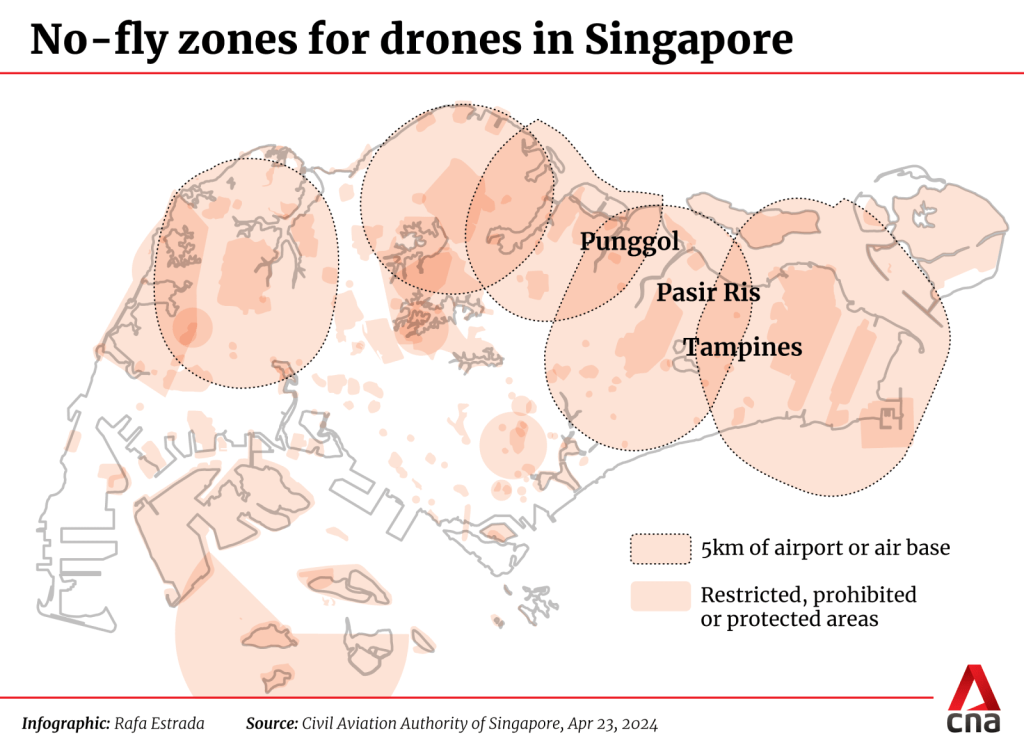
Many beginners choose locations that are convenient and overlook compliance.
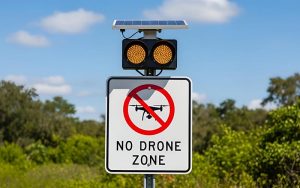
In reality, restricted areas include:
- Zones near airports such as Changi Airport
- Parts of the city centre, including Marina Bay
- Military or sensitive installations
You can check approved zones using tools provided by CAAS, such as digital airspace maps and advisories.
Flying in restricted zones without approval can lead to enforcement by the Singapore Police Force.
2. Upgrading to a Heavier or More Advanced Drone
As your interest grows, upgrading your drone is a natural step.
However, heavier drones may require:
- Registration with CAAS
- Display of registration labels
- Additional compliance requirements
Even as a hobbyist, your responsibilities increase with the capabilities of your equipment.
3. Filming for Clients or Monetised Content
This is one of the most common grey areas.
If you start:
- Filming events
- Creating content for clients
- Monetising your footage online
your activities may no longer fall under recreational use.
At this point, regulations for drone hobbyist in Singapore shift, and you may need:
- Permits for aerial work
- Certification such as UAPL
- Additional approvals depending on location
What Changes When It Becomes More Than a Hobby?
When your usage crosses into higher-risk territory, requirements can include:
- Drone registration
- Operational permits
- Pilot certification (UAPL)
These are determined by the nature of your operations, not your experience level.
For those looking to progress, structured drone courses for beginners provide a clear path from recreational flying to certified operation.
Common Misconceptions Among Hobbyists
“I’m Not Earning Money, So Rules Don’t Apply”
Even recreational flying must comply with CAAS regulations.
“If I Register My Drone, I Can Fly Anywhere”
Registration does not override airspace restrictions.
“Small Drones Are Always Exempt”
They may be exempt from registration, but not from operational rules.
“I’ve Flown Here Before, So It Must Be Allowed”
Airspace restrictions and enforcement can change over time.
Does a Drone Hobbyist Need Training?
Training is not always mandatory, but it is often what separates safe flying from risky behaviour.
Even at a basic level, flying requires:
- Awareness of airspace rules
- Understanding of weather and environmental factors
- Control in unexpected situations
Many beginners explore drone courses for beginners to build confidence before progressing to certification.
Why These Rules Matter More Than You Think
For most hobbyist, violations happen unintentionally.
Common reasons include:
- Misreading airspace boundaries
- Assuming open spaces are safe
- Underestimating drone capabilities
Penalties in Singapore can include fines or confiscation of equipment, depending on the severity of the offence.
Authorities like CAAS and SPF take a proactive approach to enforcement, especially in high-risk zones.
From Casual Flying to Confident Operation
Most people start as a hobbyist, but many eventually want to:
- Improve technical flying skills
- Explore aerial photography or videography
- Transition into more structured or professional use
At this stage, understanding regulations becomes a foundation, not just a requirement.
Build Your Skills the Right Way
Flying a drone in Singapore is not about limiting your experience. It is about ensuring that every flight is safe, controlled, and compliant.
At Apollo Global Academy (AGA), training goes beyond theory. Learners are guided through real-world scenarios, regulatory requirements, and practical assessments aligned with Civil Aviation Authority of Singapore standards.
Start Safe, Then Grow With Confidence
Starting as a hobbyist is often simple, but staying compliant requires awareness. Singapore’s regulations are not designed to discourage flying. They exist to ensure that every flight remains safe for both the operator and the public.
By understanding where you can fly, how your drone is classified, and when additional requirements apply, you reduce the risk of penalties and build stronger habits from the beginning. As your interest grows, this foundation makes it much easier to explore more advanced flying opportunities with confidence.
Take the Next Step With the Right Guidance
If you are ready to move beyond casual flying, having the right support can make a meaningful difference.
Apollo Global Academy (AGA) guides learners through both the practical and regulatory aspects of drone operations. From foundational skills to certification pathways aligned with Civil Aviation Authority of Singapore requirements, our programmes are designed to help you progress with clarity and confidence. Speak to our team to find the right path for your goals. Reach out today to get started.