
Key Takeaways
- Drone basics revolve around lift, thrust, and balance working together in real time.
- Stability is maintained through sensors, flight controllers, and rapid motor adjustments.
- Understanding quadcopter flight principles helps you control movement more precisely.
- Beginner-friendly features support learning but do not replace foundational knowledge.
- Structured training builds confidence and prepares you for safe, compliant flying.
Understanding How Drones Stay in the Air
For many beginners, drones can feel surprisingly easy to fly. With just a few controls, the device lifts off, hovers steadily, and responds smoothly to commands. Behind this simplicity is a complex system working continuously to keep the drone stable.
Learning drone basics helps you move beyond trial and error. It gives you a clearer understanding of how your drone behaves, especially in Singapore’s controlled airspace, where stability and awareness are essential. With the right foundation, flying becomes more predictable, controlled, and purposeful.
The Basics of Drone Flight: Lift and Thrust
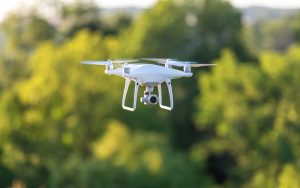
At its core, a drone flies by generating lift. Most consumer drones follow quadcopter flight principles, meaning they use four propellers powered by individual motors.
When these propellers spin, they push air downward. This creates an upward force known as lift, allowing the drone to rise. The faster the propellers rotate, the greater the lift produced.
To hover, the drone maintains a balance between lift and gravity. To ascend or descend, all propellers increase or decrease speed together. This constant adjustment is one of the most fundamental aspects of drone basic mechanics.
How Drones Move in Different Directions
Unlike traditional aircraft, drones do not rely on wings or rudders. Movement is controlled through subtle changes in motor speed.
- Forward and backward movement: The drone tilts slightly by adjusting propeller speeds on opposite sides
- Side-to-side movement: Similar adjustments allow the drone to lean left or right
- Rotation (yaw): Opposing propellers spin in different directions to rotate the drone without losing balance
These changes happen almost instantly. Understanding how tilt and thrust interact is a key part of mastering drone basics, especially when flying in tighter urban environments.
The Role of Drone Flight Control Systems
At the centre of all movement is the system that manages stability and responsiveness. Modern drone flight control systems act as the decision-making layer between your inputs and the drone’s motors.
Often referred to as the flight controller, this system processes data from multiple sensors and calculates how each motor should respond. Every command you make is translated into precise adjustments that keep the drone balanced while executing movement.
This is why drones feel intuitive to beginners. The complexity is handled in the background, allowing you to focus on control rather than constant correction.
For those looking to deepen their understanding, structured pathways such as a UAPL course introduce how these systems operate under real flight conditions.
Sensors That Keep Drones Stable
Gyroscope and Accelerometer
These sensors detect orientation and motion. They allow the drone to recognise whether it is tilting, rotating, or accelerating, and adjust accordingly.
GPS Positioning
GPS-enabled drones can hold their position in the air. Even when affected by wind, they correct their location to remain stable, which is especially useful for beginners learning to hover.
Barometer
A barometer measures air pressure to maintain altitude. This helps the drone stay at a consistent height without constant manual input.
Together, these systems explain how drones maintain stability in real time. For beginners, this combination creates a controlled and predictable flying experience.
As you progress, programmes such as a UAPL training programme help you understand how these systems interact under different flight scenarios.
Why Drones Stay Stable in the Air
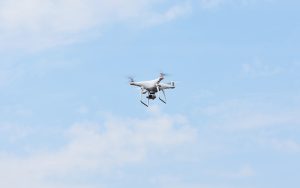
One of the most impressive aspects of drone flight is how stable it feels, even in light wind.
This stability comes from:
- Continuous sensor feedback
- Instant motor adjustments
- Software algorithms correcting imbalances
If the drone tilts slightly, the system immediately compensates by adjusting motor speeds. These corrections happen within milliseconds, which is why instability is rarely noticeable.
Understanding these mechanisms reinforces key drone basics and helps you anticipate how your drone will react in different conditions.
The Importance of Propeller Balance and Design
Propellers play a critical role in maintaining stability. Each one must spin at the correct speed and direction.
Most quadcopters use:
- Two clockwise propellers
- Two counterclockwise propellers
This configuration cancels out rotational forces, allowing the drone to hover steadily without spinning.
Damaged or unbalanced propellers can disrupt this system. Even minor imperfections can affect flight performance, which is why regular checks are part of essential basics.
How Beginner-Friendly Features Support Stability
Modern drones include built-in features that simplify flying:
- Automatic hover stabilisation
- One-tap take-off and landing
- Return-to-home functions
These features reduce the learning curve, but they are not substitutes for understanding flight behaviour. They are designed to support, not replace, foundational knowledge.
As you gain confidence, combining these features with a strong grasp of basics allows for smoother and more controlled flying.
Common Mistakes and Misconceptions Beginners Should Avoid
Even with modern stabilisation systems, many beginners develop incorrect assumptions about how drones behave. Addressing these misconceptions early helps prevent avoidable mistakes during flight.
“The Drone Will Always Stabilise Itself”
While modern drones are highly automated, they are not completely self-correcting. Strong wind, signal interference, or sensor limitations can affect performance. Relying entirely on automation without understanding control inputs can lead to a sudden loss of stability.
“Hovering Means No Input Is Needed”
Hovering may look effortless, but it still depends on continuous system adjustments. Environmental factors such as wind or nearby obstacles can disrupt balance. Small control inputs are often needed to maintain position, especially outdoors in Singapore’s urban landscape.
“GPS Makes Flying Foolproof”
GPS improves positioning, but it is not always reliable. Signal loss near buildings, indoors, or under heavy obstruction can affect accuracy. Understanding how drones maintain stability without GPS is an important part of mastering the drone basics.
“All Drones Handle the Same Way”
Different drones respond differently based on size, weight, and design. A lightweight recreational drone may react more quickly to wind compared to a heavier model. Recognising these differences helps you adapt your control approach.
“Beginner Features Replace Skill”
Features such as auto-hover and return-to-home are helpful, but they do not replace understanding flight behaviour. Over-reliance on these tools can limit your ability to respond when conditions change.
How Understanding Basics Improves Your Flying Skills
Learning how drones fly is not just theoretical. It directly improves your ability to control them.
When you understand:
- How tilt affects direction
- How wind influences stability
- How systems respond to disturbances
You become more proactive rather than reactive.
This is especially important in Singapore, where environmental factors and regulatory expectations require more precise control. Formal pathways such as UA basic training can help bridge the gap between basic understanding and applied skills.
Build Strong Foundations for Flying
Understanding basics gives beginners a clear advantage. It transforms flying from guesswork into a controlled and informed process.
At Apollo Global Academy (AGA), these foundational concepts are reinforced through structured, hands-on learning aligned with CAAS and UAPL requirements. The focus is on helping learners develop practical skills that translate into real-world flying confidence.
If you are ready to build on your foundation and take the next step in your drone journey, reach out today to explore training pathways designed for safe, steady progression.