
Key Takeaways
- A short security course can help you qualify for entry-level roles quickly, even without prior experience or a degree.
- Employers in Singapore actively hire candidates who have completed basic certification and licensing requirements.
- These courses focus on essential operational skills, making them suitable for on-site security and routine monitoring roles.
- There is a clear difference between basic security training and specialised skills, especially for surveillance-focused positions.
- A simple step-by-step workflow can take you from training to your first job in the security industry.
Introduction
For many individuals considering a career switch in Singapore, security is often seen as a practical and accessible option. It does not require a degree, and structured short courses provide a clear pathway into the industry.
A common question, however, is whether a short course is enough not just to enter the field but to build a sustainable career, particularly in surveillance roles.
The short answer is yes for entry-level employability, but not always for long-term progression. Understanding where a short course fits in the bigger picture is key to making the right decision.
Does a Short Security Course Make You Employable in Singapore?
Yes, a short course can make you employable, especially for entry-level positions.
In Singapore, individuals who:
- Complete the required training
- Obtain the necessary licence
- Meet basic eligibility criteria
can begin working as security officers.
There is steady hiring demand across:
- Office buildings
- Condominiums
- Shopping centres
- Transport and logistics facilities
Job listings often state that no prior experience is required, as long as candidates have completed the necessary certification. For career switchers, this creates a clear and realistic entry point into the workforce.
Why There Is Strong Demand for Entry-Level Security Roles
The demand for security personnel in Singapore remains consistent due to several factors.
1. Urban Infrastructure and Development
Singapore’s dense environment requires constant monitoring of buildings, public spaces, and key infrastructure.
2. Regulatory and Safety Requirements
Many sectors require security presence for access control, safety compliance, and incident response.
3. Shift-Based Workforce Needs
Security operations run around the clock, creating continuous hiring needs across multiple shifts.
This makes entry-level roles widely accessible, especially for those entering through a security course.
What a Short Security Course Prepares You For
A security course equips individuals with the fundamentals needed to perform basic security duties.
This typically includes:
- Patrolling procedures
- Access control management
- Incident reporting
- Basic operational protocols
These skills are sufficient for:
- On-site security officer roles
- Routine monitoring tasks
- Supporting daily operations
For many individuals, this is enough to secure their first role in the industry.
Basic Security Training vs Specialised Skills
It is important to distinguish between basic security training and that for more specialised skills.
A short course focuses on foundational knowledge required to enter the workforce. It prepares you to perform standard duties safely and consistently.
However, surveillance roles often require specialised CCTV knowledge, such as:
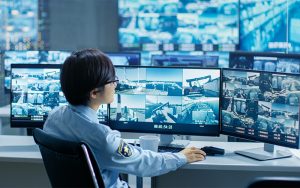
- Monitoring multiple camera feeds
- Identifying unusual activity
- Understanding how different systems interact
These capabilities go beyond what is typically covered in entry-level training.
Where a Short Security Course Falls Short for Surveillance Roles
While a skills-based course supports entry into the industry, it does not fully prepare individuals for surveillance-focused positions.
These roles require additional familiarity with:
1. CCTV Monitoring
Operators must observe and interpret live footage, often across multiple screens.
2. System Integration
Modern environments use interconnected systems such as CCTV, alarms, and access control.
3. Technical Awareness
Basic troubleshooting and system handling may be required during daily operations.
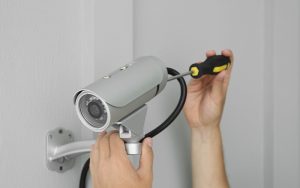
This is where more focused learning, such as a WSQ CCTV course in Singapore, becomes relevant for those interested in surveillance roles.
How to Move From Training to Your First Security Job
For individuals starting from scratch, entering the industry can be straightforward.
Step 1: Enrol in a Security Course
Choose from any recognised short-term certification courses in Singapore to meet entry requirements.
Step 2: Complete Mandatory Training and Licensing
Finish the required modules and apply for your security licence.
Step 3: Apply for Entry-Level Roles
Look for positions such as security officer or site-based roles across commercial or residential properties.
Step 4: Gain On-the-Job Experience
Learn operational routines, understand workplace procedures, and build confidence in real environments.
Expanding Options Within Surveillance Roles
Once you are in the industry, exposure to surveillance systems may increase depending on your role.
To better prepare for these opportunities, some individuals choose to explore:
- Structured CCTV and security training
- More technical programmes, such as a security systems engineering course
These options help build familiarity with systems that are commonly used in modern security environments.
Can You Realistically Stay With Just a Short Security Course?
Yes, it is possible to remain in the industry with only an entry-level security course, especially if your goal is stable, entry-level employment.
Many individuals choose to stay in roles such as:
- Security officers in residential or commercial sites
- Access control personnel
- Patrol-based positions
These roles offer:
- Consistent demand
- Predictable responsibilities
- Stable income with shift-based structures
For some, this is sufficient, particularly if they prioritise job stability over role variation or technical responsibilities.
However, there are practical considerations to keep in mind.
Work environments may remain largely routine, with limited exposure to surveillance systems or more complex operations. Over time, this can mean:
- Repetitive daily tasks
- Fewer opportunities to handle advanced systems
- Slower changes in job scope
This does not mean the role lacks value. Entry-level security positions are essential to daily operations across many sectors. It simply reflects the nature of the role when built solely on foundational certification.
For individuals who are comfortable with structured, routine work and do not require expanded responsibilities, staying in the industry with an entry-level security course can be a realistic and sustainable choice.
Conclusion
A short security course in Singapore is enough to get started. It provides a practical and accessible pathway into entry-level roles, with steady demand across multiple sectors.
For individuals looking to enter the workforce quickly, it offers a clear route to employment without requiring prior experience.
At Apollo Global Academy, a range of training programmes is available to support your first step into the security industry. If you are considering a career switch, reach out to explore how the right course can help you start with confidence.