
Key Takeaways
- The term “drone” is informal and commonly used by the public, but not in official regulations.
- In Singapore, authorities like the Civil Aviation Authority of Singapore use the term “unmanned aircraft (UA)” in legal frameworks.
- “UAV” is a technical term referring specifically to the aircraft component in aviation and engineering contexts.
- Understanding terminology helps you interpret rules, licensing, and registration requirements correctly.
- Moving into structured learning, such as a drone course for beginners, calls for a baseline familiarity with all three terms.
Why These Terms Cause Confusion
If you are new to flying, you have likely encountered multiple terms used to describe the same device. Some people call it a drone, others refer to it as a UAV, while official documents in Singapore often use “unmanned aircraft.”
This overlap can be confusing, especially when trying to understand regulations or training requirements. In Singapore’s tightly managed airspace, terminology is not just a matter of preference. It can influence how rules are interpreted and applied.
Understanding the definition of a drone alongside its technical and regulatory equivalents helps you navigate Singapore’s framework with far greater clarity.
What Is the Definition of a Drone?
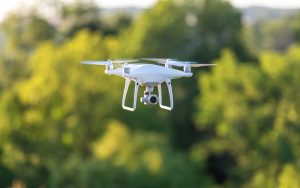
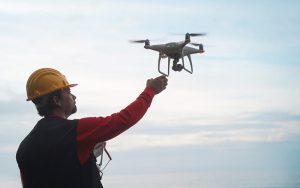
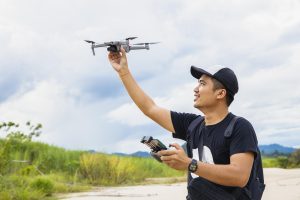
The definition of a drone is broad and informal. In everyday language, it refers to any flying device that operates without a pilot onboard.
For most people, “drone” describes consumer devices used for:
- Recreational flying
- Aerial photography and videography
- Casual exploration or hobby use
However, this term is not formally defined under Singapore law. “Drone” is not the terminology used in regulatory documents of organisations, such as the Civil Aviation Authority of Singapore.
Instead, it functions as a convenient, user-friendly label rather than a legal or technical classification.
Meaning of UAV in Aviation Terms
“UAV” stands for unmanned aerial vehicle, a more precise term used in aviation and engineering contexts.
In terms of the meaning of UAV in aviation terms, it refers specifically to:
- The aircraft itself
- Its onboard systems, such as motors, sensors, and navigation components
Importantly, a UAV does not include the ground control system or communication links. This distinction becomes relevant in professional environments where systems are analysed in detail.
You will often see the term UAV used in:
- Security and surveillance operations
- Infrastructure inspections
- Surveying and mapping projects
This term signals technical precision and is commonly introduced in structured programmes such as a UAPL certification pathways.
Definition of Unmanned Aircraft in Singapore (According to CAAS)
In Singapore, the official term is “unmanned aircraft” (UA).
According to the Civil Aviation Authority of Singapore, an unmanned aircraft refers to any aircraft that is operated without a pilot onboard.
This definition of unmanned aircraft in Singapore is intentionally broad. It applies to:
- Small recreational drones
- Commercial inspection devices
- Advanced aviation systems
All regulatory requirements, such as:
- Registration
- Operating restrictions
- Permit applications
are written using the term “unmanned aircraft.”
This means that regardless of what you call your device, Singapore law will treat it as a UA.
What About RPAS (Remotely Piloted Aircraft System)?
Another term you may encounter is remotely piloted aircraft system (RPAS).
Unlike UAVs, RPAS refers to the entire system, which includes:
- The aircraft (UAV)
- The remote controller
- Communication systems
- The human operator
This makes RPAS the most complete and technically accurate term in aviation contexts.
While less commonly used by hobbyists, RPAS appears in:
- Advanced aviation discussions
- Certification frameworks
- Professional operational planning
Understanding the terminal use of remotely piloted aircraft systems (RPAS) becomes increasingly important as you move into regulated or commercial use.
Drone vs UAV vs Unmanned Aircraft: Key Differences
Level of Formality
- Drone: Informal, public-facing term
- UAV: Technical and industry-specific
- Unmanned aircraft: Legal and regulatory term
Scope of Meaning
- Drone: Broad and flexible definition
- UAV: Refers only to the aircraft
- Unmanned aircraft: Covers all unmanned flying devices under law
Usage in Singapore
- Hobbyists: “Drone”
- Training and technical materials: “UAV”
- Authorities and legislation: “Unmanned aircraft”
| Term | Type | Scope | Used By |
| Drone | Informal | Broad, general use | Public, hobbyists |
| UAV | Technical | Aircraft only | Industry, training |
| Unmanned Aircraft | Legal | All unmanned aircraft | CAAS, regulations |
| RPAS | System-level | Entire system | Aviation professionals |
Why Terminology Matters in Singapore Regulations
Singapore maintains a highly structured aviation environment due to its dense urban layout and proximity to controlled airspace.
Because of this, terminology directly affects compliance.
According to the Civil Aviation Authority of Singapore:
- Registration requirements apply to “unmanned aircraft”
- Operational rules are written using UA classifications
- Licensing frameworks are tied to defined UA use cases
If you rely only on the definition of a drone, you may overlook important legal distinctions.
Understanding the correct terminology ensures:
- Accurate interpretation of rules
- Safer flight practices
- Reduced risk of penalties
How These Terms Relate to Training and Certification
As you move beyond casual flying, terminology becomes more structured.
Training programmes often introduce:
- UAV system components
- RPAS frameworks
- Regulatory terminology aligned with CAAS
For example:
- A drone course, often eligible for SkillsFuture, typically begins with basic concepts using the term “drone”.
- A beginner-friendly drone course bridges into UAV and regulatory language
- Advanced pathways, such as UAPL training in Singapore, focus on compliance and operational standards
This progression reflects how the industry transitions from informal understanding to technical and legal clarity.
What This Means for Hobbyists and Beginners
If you are flying recreationally, using the word “drone” is perfectly acceptable in everyday conversation.
However, when checking rules or requirements, you should recognise that:
- Your device is classified as an unmanned aircraft
- Regulations are written using formal terminology
- Compliance depends on understanding these definitions
This awareness helps you:
- Register correctly if required
- Avoid restricted areas or violations
- Transition smoothly into formal training if needed
Understanding the Terms Helps You Fly with Confidence
The definition of a drone, UAV, and unmanned aircraft may seem interchangeable at first, but in Singapore, each term serves a distinct purpose.
“Drone” simplifies communication, “UAV” adds technical precision, and “unmanned aircraft” forms the legal foundation enforced by the Civil Aviation Authority of Singapore.
Understanding these differences is not just about terminology. It is about interpreting regulations correctly, making informed decisions, and operating responsibly in a highly regulated airspace.
Ready to Go Beyond Basic Knowledge?
At Apollo Global Academy (AGA), training goes beyond theory. As a direct provider aligned with Singapore’s regulatory framework, we equip learners with both practical flight skills and a clear understanding of unmanned aircraft regulations.
Whether you are starting or looking to formalise your skills, structured pathways are available to help you progress confidently.
It is our mission to guide learners through both the practical and regulatory aspects of drone operations. From foundational skills to certification pathways aligned with Civil Aviation Authority of Singapore requirements, our programmes are designed to help you progress with a clear plan. Speak to our team to find the right path for your goals. Reach out today to get started.