
Introduction
Singapore’s reputation as one of the safest cities in the world rests on a carefully built and continuously evolving security ecosystem. Maintaining this standard, however, is becoming more complex as risks grow in both physical and digital environments.
The demand for security professionals is increasing as Singapore continues to develop into a highly urbanised, globally connected economy. With more than 40,000 security officers supporting infrastructure, businesses, and public spaces, the scale of operations reflects just how essential the sector has become.
At the same time, the industry is undergoing transformation. Technology adoption, job redesign, and higher-skilled roles are shifting security away from manpower-heavy models towards intelligence-led systems. Despite these improvements, manpower shortages remain, and the demand continues to outpace supply.
This shift is not just about filling roles. It reflects a deeper change in how security is delivered, where operational awareness, technical capability, and decision-making now play a far greater role.
Who This Shift Creates Opportunities For
The rising demand for security is not limited to one segment of the market. It is creating ripple effects across both businesses and individuals, making the sector’s transformation relevant from multiple perspectives.
For businesses
The shift towards integrated, technology-enabled security presents an opportunity to rethink how risk is managed, especially in response to rising demands for security. Organisations are moving away from isolated guarding functions towards systems that combine surveillance, analytics, and centralised monitoring. This allows for more efficient operations, stronger incident response, and better protection of assets. At the same time, it increases the need for partners and personnel who can support these more complex setups.
For individuals
The evolving landscape opens up more structured and sustainable career pathways. The demand for security jobs in Singapore is no longer centred solely on manpower, but on skills, certification, and the ability to work with modern systems. This creates clearer entry points for those looking to build a stable career, as well as opportunities for progression through upskilling.
This dual impact sets the stage for the broader discussion in this article. The drivers behind the growth of the security industry in Singapore are not only increasing demand but also a reshaping of what the industry requires of both organisations and the workforce.
Key Takeaways
|
Key Drivers Behind the Growing Demand For Security in Singapore
Urbanisation, Infrastructure Expansion, and Risk Exposure
Singapore’s rapid development has significantly increased the number of assets that require protection. From MRT networks and integrated developments to logistics hubs and data centres, each layer of infrastructure adds complexity.
This is where urbanisation and security demand become closely linked. High population density and heavy foot traffic in areas such as the CBD, airports, and transport interchanges require constant monitoring and coordination.
Major developments illustrate this clearly:
- Changi Airport Terminal 5 will expand passenger capacity, requiring more advanced surveillance and coordinated security systems
- Tuas Mega Port introduces new challenges in cargo monitoring and automated operations
- The rise of data centres increases the need to secure both physical and digital assets
These developments directly contribute to the demand for security jobs in Singapore, while also raising expectations for skill levels and system integration.
Government Initiatives and Industry Transformation Driving the Demand for Security
Singapore’s government plays a central role in shaping the growth of the security industry. The Security Industry Transformation Map (ITM) focuses on improving productivity and upgrading roles.
Key shifts include:
- Automated surveillance and remote monitoring
- Use of AI and robotics for patrol and anomaly detection
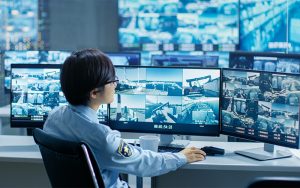
- Centralised command centres overseeing multiple locations
Despite these efficiencies, manpower shortages persist. The nature of shift work and expanding responsibilities means that demand remains strong, especially for those with upgraded skills.
Workforce Standards in Singapore’s Security Industry Supporting the Demand for Security
Singapore’s security sector operates within a structured framework that sets clear expectations for roles, responsibilities, and competencies across the workforce. Rather than leaving progression to experience alone, the industry defines job levels from Security Officer to Senior Security Supervisor, with each tier linked to specific skill requirements and operational scope.
This standardisation creates several important outcomes:
- Clear role expectations, ensuring consistency across different employers and sites
- Defined competency benchmarks, guiding what individuals need to perform effectively at each level
- A structured progression pathway, where advancement is tied to capability rather than tenure alone
As a result, entering the industry today involves more than meeting basic entry criteria. There is an increasing emphasis on building relevant skills early, particularly as roles expand to include technology-supported operations.
For individuals, this reinforces the importance of formal training as a starting point. Programmes such as CCTV courses provide foundational knowledge aligned with these workforce standards, helping new entrants meet industry expectations while positioning themselves for future progression.
Business Continuity and Risk Management Priorities
Security is no longer seen as a backend function. It is now part of strategic planning.
Businesses across sectors like finance, healthcare, and logistics are investing more in security due to the high cost of disruptions. Operational downtime can lead to financial losses and reputational damage.
This shift is driving demand for professionals who can:
- Assess vulnerabilities across systems and locations
- Implement preventive frameworks
- Coordinate responses across teams
As a result, the demand for security is increasingly tied to risk management and long-term business resilience.

Emerging Trends Shaping the Future of Security Careers
Technology Integration and Smart Security Systems Shaping the Demand for Security
Technology is at the centre of trends in Singapore’s security sector.
Smart surveillance, video analytics, and integrated monitoring systems are becoming standard. These technologies enable:
- Real-time threat detection
- Predictive risk analysis
- Automated reporting
However, technology does not eliminate jobs. It changes them.
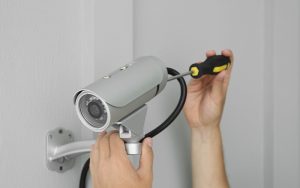
There is a growing demand for professionals who can operate and interpret these systems. Skills gained through CCTV system training in Singapore are becoming increasingly relevant as systems grow more complex.
Workforce Transformation and Skills-Based Career Progression Behind the Demand for Security
The security workforce is shifting towards a skills-based model. Traditional roles are evolving into positions that require more responsibility and technical knowledge.
Future roles are likely to include:
- Operators managing multiple sites remotely
- Supervisors overseeing integrated systems
- Specialists in security analytics and risk management
This reflects a broader shift in which the value of roles is increasing, even as reliance on manpower decreases.
For individuals, this means career progression depends on capability. Pursuing a security systems engineering course can help bridge the gap between entry-level roles and higher-value positions.
Workforce Standards and the Progressive Wage Model Strengthening the Demand for Security
In Singapore, workforce transformation in the security sector is closely supported by structured policies such as the Progressive Wage Model (PWM). Introduced to uplift lower-wage workers, the PWM establishes clear wage benchmarks tied to skills, responsibilities, and career progression within the industry.
Under the PWM, roles are mapped across different levels, from Security Officer to Senior Security Supervisor. Each tier requires specific training and competencies, creating a transparent and structured pathway for advancement.
PWM Wage Benchmarks for Full-Time Outsourced Security Officers (35–44 hours/week)
Job Level | 2023 | 2024 | 2025 | 2026 | 2027 | 2028 |
Senior Security Supervisor | ≥ $2,240 | ≥ $3,550 | ≥ $3,770 | ≥ $3,990 | ≥ $4,210 | ≥ $4,430 |
Security Supervisor | ≥ $2,040 | ≥ $3,250 | ≥ $3,470 | ≥ $3,690 | ≥ $3,910 | ≥ $4,130 |
Senior Security Officer | ≥ $1,830 | ≥ $2,950 | ≥ $3,170 | ≥ $3,390 | ≥ $3,610 | ≥ $3,830 |
Security Officer | ≥ $1,650 | ≥ $2,650 | ≥ $2,870 | ≥ $3,090 | ≥ $3,310 | ≥ $3,530 |
Note: Table data acquired from the official Ministry of Manpower site and is subject to change.
The wage structure outlined under the Progressive Wage Model signals a clear shift in how the security industry is positioning itself.
From the progression shown, entry-level wages have moved meaningfully upward over a short period, with Security Officer salaries crossing the $2,600 mark from 2024 onwards and continuing to rise through 2028. This suggests a deliberate effort to improve baseline compensation, making the sector more viable and attractive as a long-term career rather than a stopgap role.
At the same time, the narrowing gap between job tiers indicates a more structured and predictable progression pathway. The move from Security Officer to Senior Security Supervisor is no longer just a change in title but is increasingly tied to measurable increases in pay, responsibility, and required competencies. This reinforces the idea that advancement is expected, not incidental.
The structure also reflects a shift in how work is organised. Rather than relying heavily on extended hours to drive income, the model places greater emphasis on base wages and clearly defined roles. This points towards an industry moving away from overtime-dependent earnings and towards more sustainable workforce practices, even as operational demands remain high.
Another key takeaway is the built-in review cycle. Regular revisions to the wage schedule suggest that the model is designed to evolve with market conditions, workforce expectations, and the broader growth of Singapore’s security industry. It is not a static framework, but one that adapts as the sector matures.
Taken together, these changes highlight a broader trend in the demand for security. The industry is no longer focused solely on manpower volume. It is placing increasing value on skills, training, and role complexity. For individuals, this means that entering the sector today involves more than meeting minimum requirements. It requires a mindset of continuous development, where certification and upskilling are directly linked to career progression and earning potential.
Is It a Good Time to Join the Industry?
The current landscape suggests a clear answer.
Yes, but only for those prepared to build the right skills.
The demand for security jobs in Singapore is supported by long-term drivers such as infrastructure growth, technology adoption, and risk management priorities. At the same time, manpower shortages create accessible entry points.
What has changed is the expectation.
The industry now requires:
- Operational awareness
- Technical familiarity
- Decision-making ability
Building a Strong Entry Path Through Training
A structured approach is increasingly important. This includes certification programmes and practical training aligned with industry standards.
Apollo Global Academy provides programmes such as CCTV and security training, designed to equip learners with both foundational knowledge and applied skills.
For individuals entering the sector, structured learning offers:
- Better readiness for licensing requirements
- Confidence in handling modern systems
- Clearer pathways for progression
Typical Pathway for Individuals Entering the Security Industry in Singapore
While entry points vary, industry patterns show that most individuals follow a structured progression shaped by regulation, training requirements, and evolving job expectations.
1. Meeting Baseline Licensing Requirements
Entry typically begins with fulfilling regulatory criteria set by the Police Licensing & Regulatory Department (PLRD), including eligibility checks and certification prerequisites required to work in security roles.
2. Completing Foundational Training
Candidates then undergo basic training aligned with national standards. These programmes cover essential operational skills such as access control, patrolling, and incident reporting, forming the baseline for workforce readiness.
3. Building Early Technical Familiarity
As the demand for security jobs in Singapore shifts towards more technology-integrated roles, many entrants pursue additional exposure through skills-based training or a WSQ CCTV course in Singapore. This reflects the increasing importance of surveillance systems in day-to-day operations.
4. Gaining Operational Experience
Most individuals enter the workforce in frontline roles, where they develop situational awareness and practical competence across different environments such as commercial buildings, transport hubs, and industrial sites.
5. Advancing Through Targeted Upskilling
Career progression is typically supported by further training. Programmes such as CCTV system training or a security systems course are commonly pursued by those moving into supervisory or system-oriented roles.
6. Transitioning to Higher-Value Roles
With experience and certification, individuals often progress into roles involving integrated system management, remote monitoring, or broader risk coordination. These positions reflect the ongoing shift towards technology-enabled security operations.
This pathway highlights a broader industry trend. Progression is increasingly structured around skills development and adaptability, rather than tenure alone, reinforcing the importance of continuous training in a rapidly evolving security landscape.
Frequently Asked Questions
1. Why is there a growing demand for security professionals in Singapore?
The demand for security is driven by urban growth, technological advancements, and increased focus on risk management across industries.
2. How large is the security industry globally?
The global security market is projected to exceed USD 400 to 500 billion, with steady growth driven by both physical and digital security needs.
3. Is there a shortage of security workers in Singapore?
Yes. Despite a large workforce, the industry continues to face shortages, especially in skilled roles.
4. Will technology replace security jobs?
No. Technology is transforming roles, not replacing them. There is an increasing demand for skilled professionals.
5. What are the future career prospects?
Opportunities are expanding in smart systems, cybersecurity, and integrated risk management.
6. Where can I get certified?
Training providers like Apollo Global Academy offer structured programmes aligned with industry standards, helping individuals enter the sector with confidence.
Conclusion
The demand for security in Singapore reflects a deeper shift in how safety, resilience, and risk are managed in a modern economy.
What was once a manpower-driven industry is now evolving into a technology-enabled sector that values skills, adaptability, and strategic thinking. This transformation is not slowing down. If anything, it is accelerating.
For individuals, this presents a clear opportunity. Those who invest in relevant training and skill development will be better positioned to enter and grow within the industry.
Apollo Global Academy supports this journey through structured, industry-aligned programmes that bridge knowledge and real-world application. If you are looking to build a stable, future-ready career, now is the time to take that first step. Reach out today to explore how the right training can open the door to long-term opportunities in the security sector.